Policy Research, Policy Briefs and Academic Research
My Honours Thesis in Sociology
Digital battlegrounds: Do AI generated images of war reproduce hegemonic gender narratives?
During my Honours thesis year in 2025, I spent a lot of time looking at AI-generated images of war and thinking about what they show and, maybe more importantly, what they leave out.
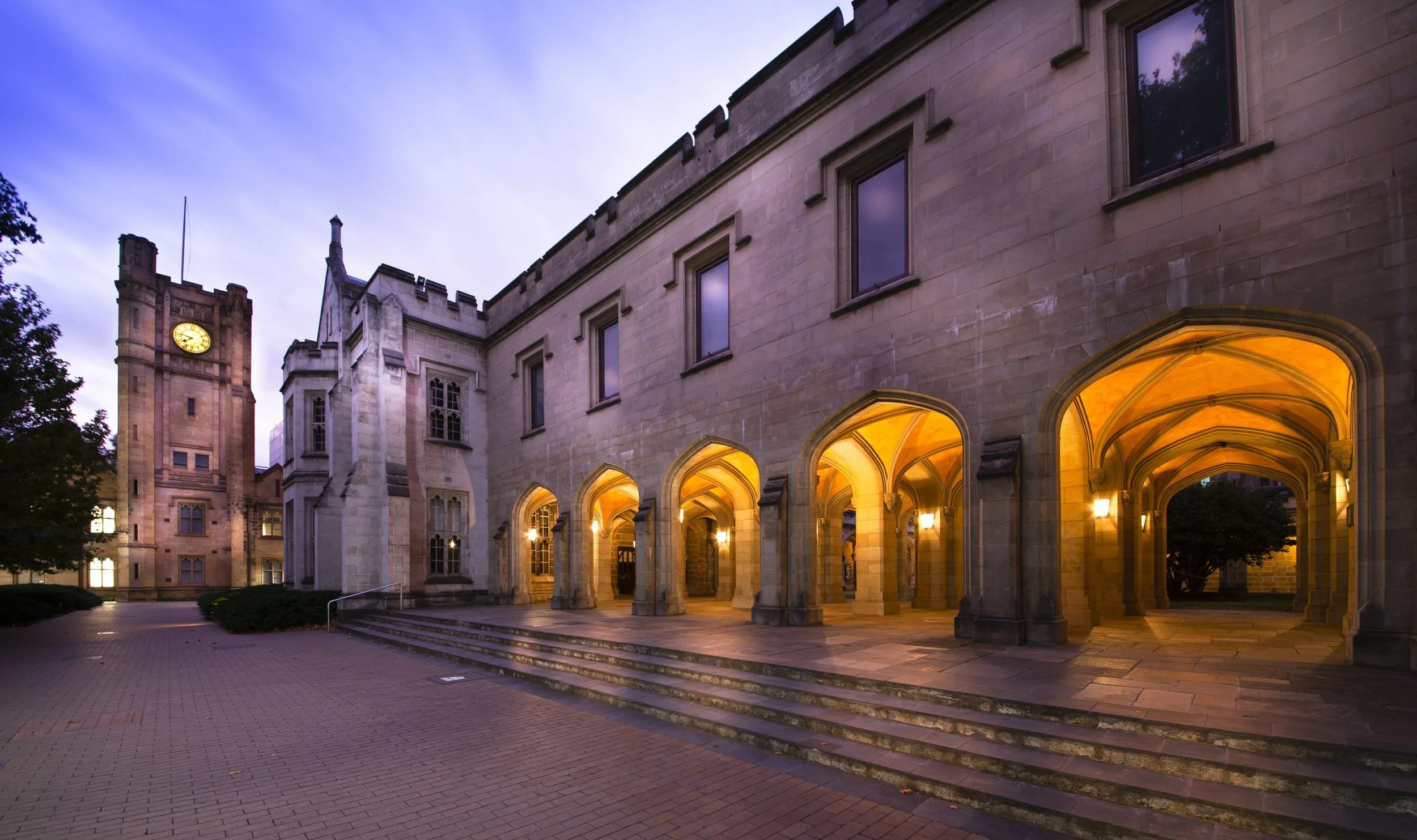
Drawing on over 176 sources, I completed my Honours thesis in sociology, “Digital Battlegrounds: Do AI-Generated Images of War Reproduce Hegemonic Gender Narratives?” at the University of Melbourne. My research explored how the generative AI image models, Grok and DALL-E, frame conflicts and the women within them, focusing on the cases of Ukraine and Gaza.
With sociological research on generative AI still incredibly scarce, I decided to develop a new methodology, drawing on media studies image-analysis, as well as platform ‘walkthroughs’. This approach allowed me to measure how each layer of user prompting affected the discourses reproduced in the AI-generated images.
My conclusions: my findings suggest that even targeted prompting has a limited effect. GenAI images continue to flatten nuance, favour highly positive depictions, and reproduce colonial-patriarchal ways of seeing.
While still exploratory and in its early stages, this research contributes to a growing body of work that examines how algorithmic systems shape knowledge production. The patterns that I identified in GenAI image models might raise broader questions about representation and bias across other AI models, like large language models.
As AI becomes increasingly embedded in the media, this research reinforced for me that AI must be studied not just as a technical tool, but as a social system shaped by whose voices are included. Until marginalized perspectives are integrated into AI development, these technologies risk further silencing marginalized voices and potentially skewing how we understand world events.
Policy Briefs
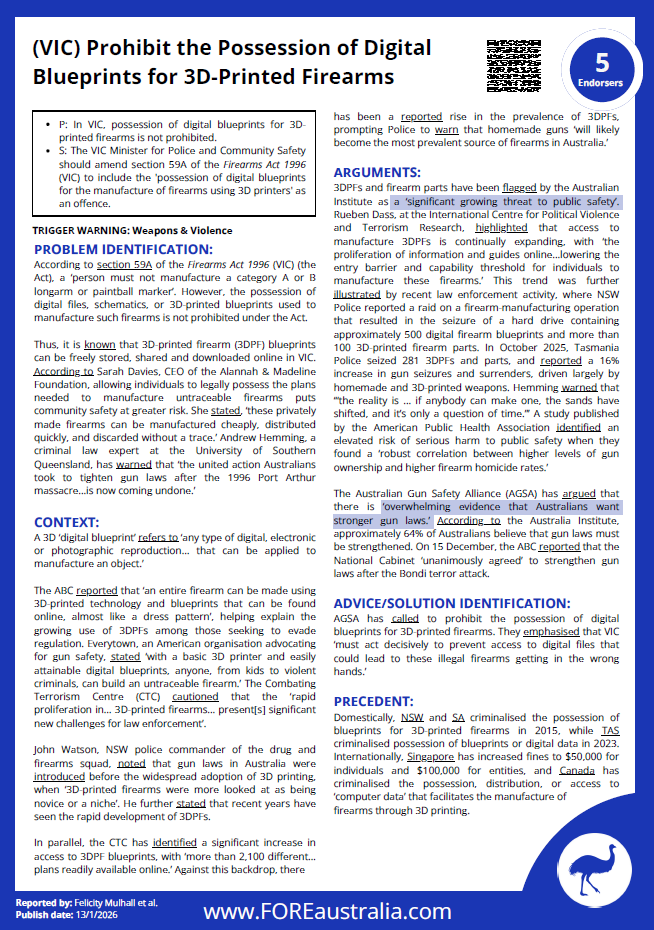
(VIC) Prohibit the Possession of Digital Blueprints for 3D-Printed Firearms
For FORE Australia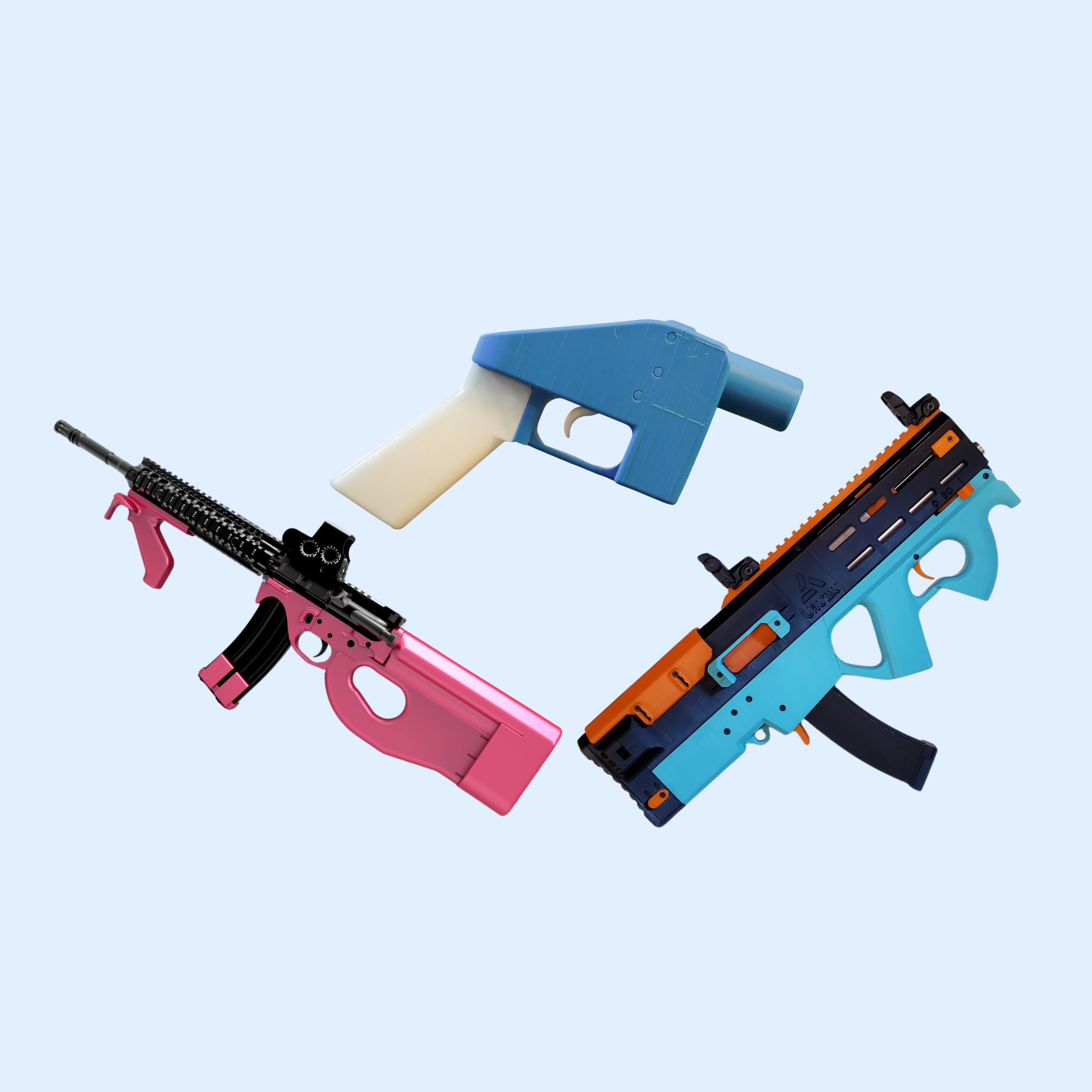
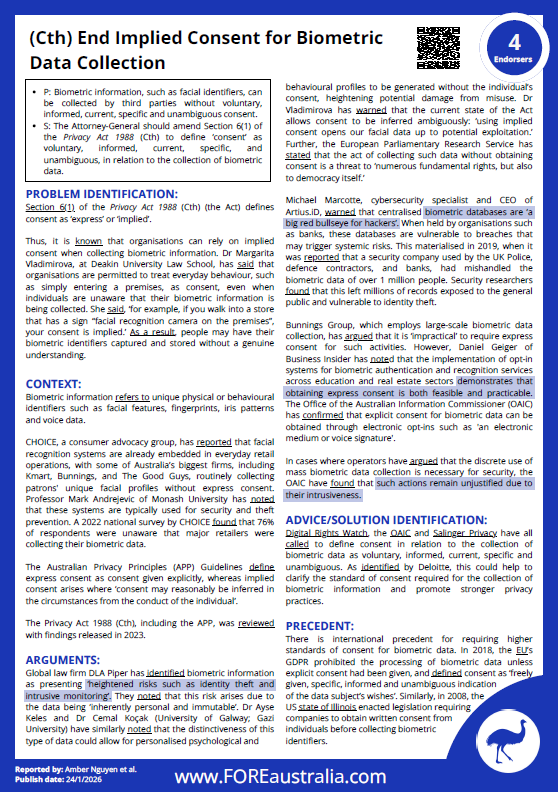
(Cth) End Implied Consent for Biometric Data Collection
For FORE Australia